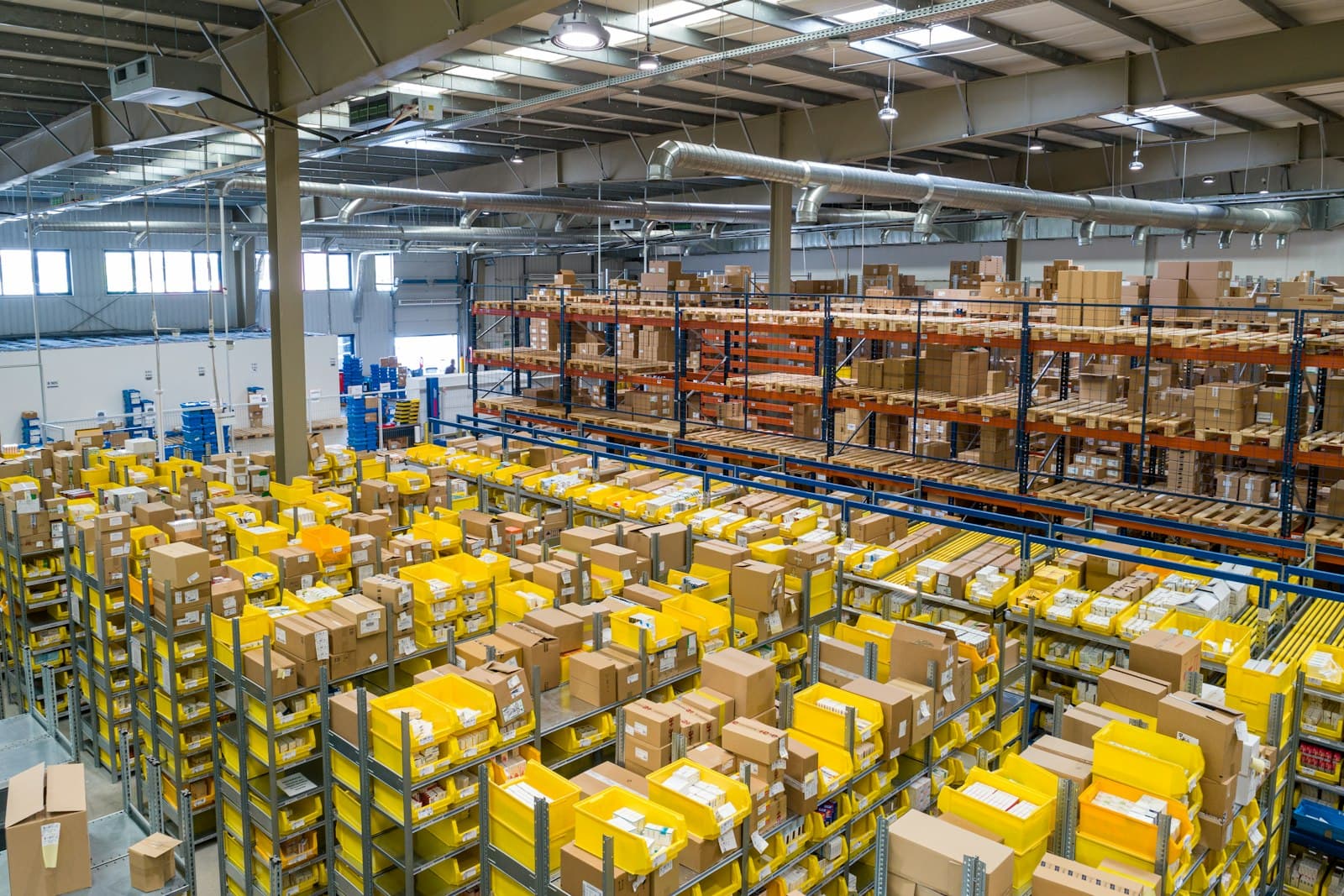
Cutting cycle time across a core workflow.
We re-engineered a bottlenecked order-to-ship workflow — capturing inbound orders automatically, killing re-keying, and scheduling against the real constraint — to compress cycle time and release capacity the operation already owned.
Published June 14, 2026 · Updated June 19, 2026
The context
A mid-size operator was leaking throughput at the seams of a single core workflow. Customer orders arrived by email, PDF, and EDI in inconsistent formats and were re-keyed into the ERP by hand, while the production schedule lived in a spreadsheet that was obsolete the moment a machine went down or a rush order landed.
The challenge
Every step of order-to-ship cost time and accuracy. Manual order entry runs around $24 per order versus under $6 automated, and a data-entry error rate near one to two percent meant wrong quantities and ship-to addresses that became disputes, returns, and credit memos. With the constraint line stuck near a 60% OEE baseline — against an 85% world-class benchmark — roughly 40% of planned capacity was lost to downtime, slow cycles, and changeovers no one could see in real time.
Representative outcome modeled on industry benchmarks; individual results vary.
How we delivered it.
- 1
Mapped the end-to-end order-to-ship workflow and timed each handoff, exposing where cycle time and rework actually accumulated.
- 2
Automated inbound order capture from email, PDF, and EDI with AI extraction that validates SKUs, pricing, and terms against the ERP before a human ever touches it.
- 3
Replaced the spreadsheet schedule with finite-capacity scheduling that sequences jobs to protect the constraint and minimize changeovers.
- 4
Stood up live OEE and cycle-time dashboards so supervisors react to the real bottleneck, and the schedule re-plans automatically when conditions change.
What we built
- AI-assisted order capture that turns email/PDF/EDI into validated ERP orders
- Entry-time validation that catches errors before they become returns or credits
- Finite-capacity scheduling that sequences against the true constraint
- Live OEE and cycle-time dashboards replacing the spreadsheet and the whiteboard
The outcomes
Representative outcome modeled on industry benchmarks; individual results vary.
“We weren't short on demand — we were short on flow. Fixing how orders came in and how the line was scheduled gave us capacity we already had but couldn't see.”
The service and the related work.
Ready to streamline the busywork?
Partner with us to automate the manual work, connect the systems your operation runs on, and scale what works. Let's map the fastest path to measurable results.